How Do Porta Potties Work?
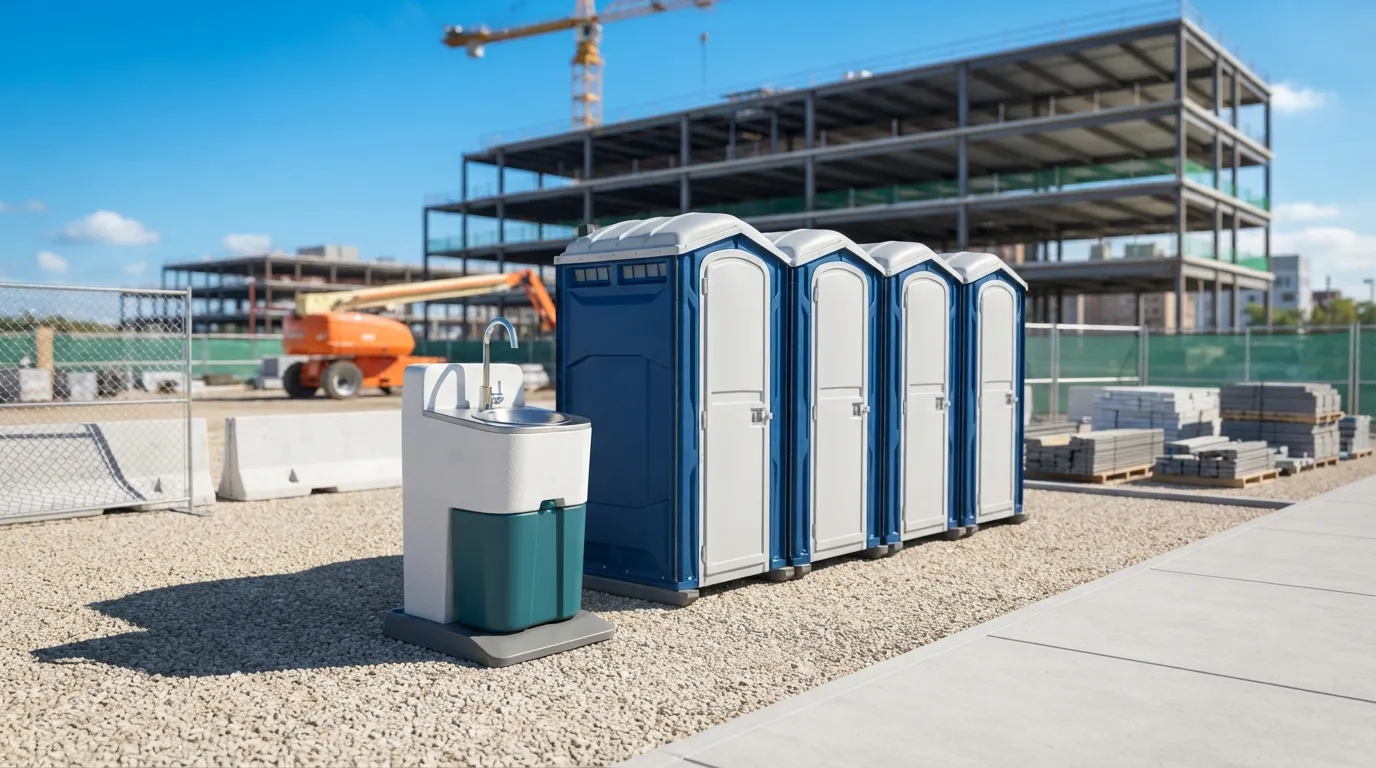
Think of it as a self-contained system. The bowl sits over a holding tank built into the base, and a blue or green chemical deodorizer drops into that tank before delivery to break down waste and knock back smell. There's no flush, no water tank feeding it. A vent stack runs up the back of the unit to pull odor out and away from the seat, which is why you'll see a pipe running up one corner. Everything sits inside a footprint about 44 by 48 inches on the ground and stands roughly 92 inches tall, so it fits in a driveway, a job site corner, or a strip along a fence line without needing much room. A construction worker running to a porta-potty between shifts on a Livermore job site is using the same basic setup you'd find at a wedding or a county fair, and a simple how do porta potties work diagram would show the same three parts: bowl, tank, vent. For jobs with a crew, standard porta potty rental covers most needs, and our portable toilet rental page walks through the size options if you're planning for more than one unit.
How Does a Portable Sink Work?
People searching for portable toilet chemicals near me are usually asking the same question as someone searching septic tank cleaning chemical: what breaks down waste between service visits, and the answer for both is a dedicated deodorizing blend, not a household cleaner. A portable sink runs on its own fresh water tank and a foot pump or gravity valve, no plumbing required. Water flows down into a basin, drains into a separate gray water tank underneath, and soap sits in a dispenser mounted on the unit. Under 29 CFR 1910.141(d)(2), washing facilities need soap and a way to dry hands, and hand sanitizer alone doesn't satisfy that. That's the gap a handwashing station rental or a portable sink rental closes on a site that has no other water source. If your crew works with paints, coatings, herbicides or insecticides, OSHA 1926.51(f)(1) requires washing facilities for that specific exposure, not general handwashing. Check our handwashing requirements page if you're not sure which rule applies to your crew.
Do Flushable Porta Potties Actually Flush?
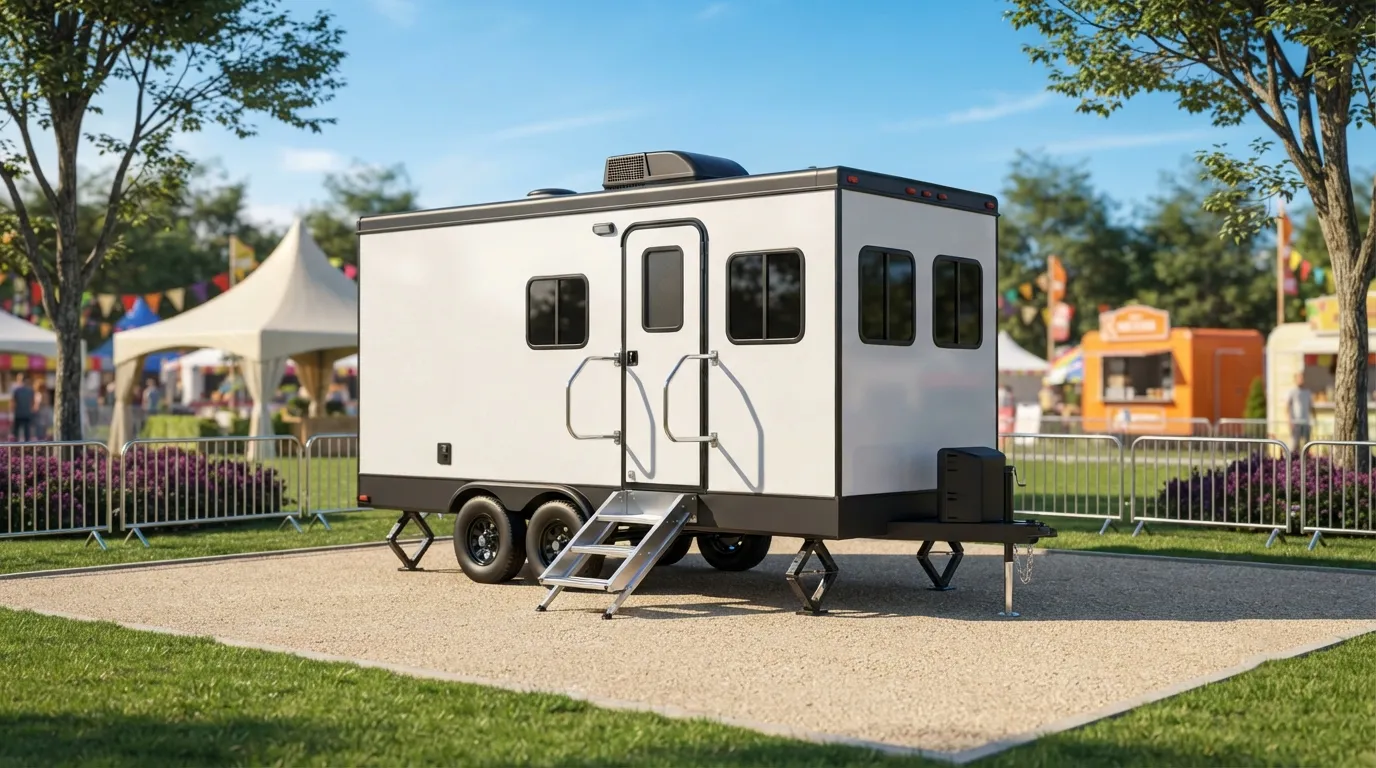
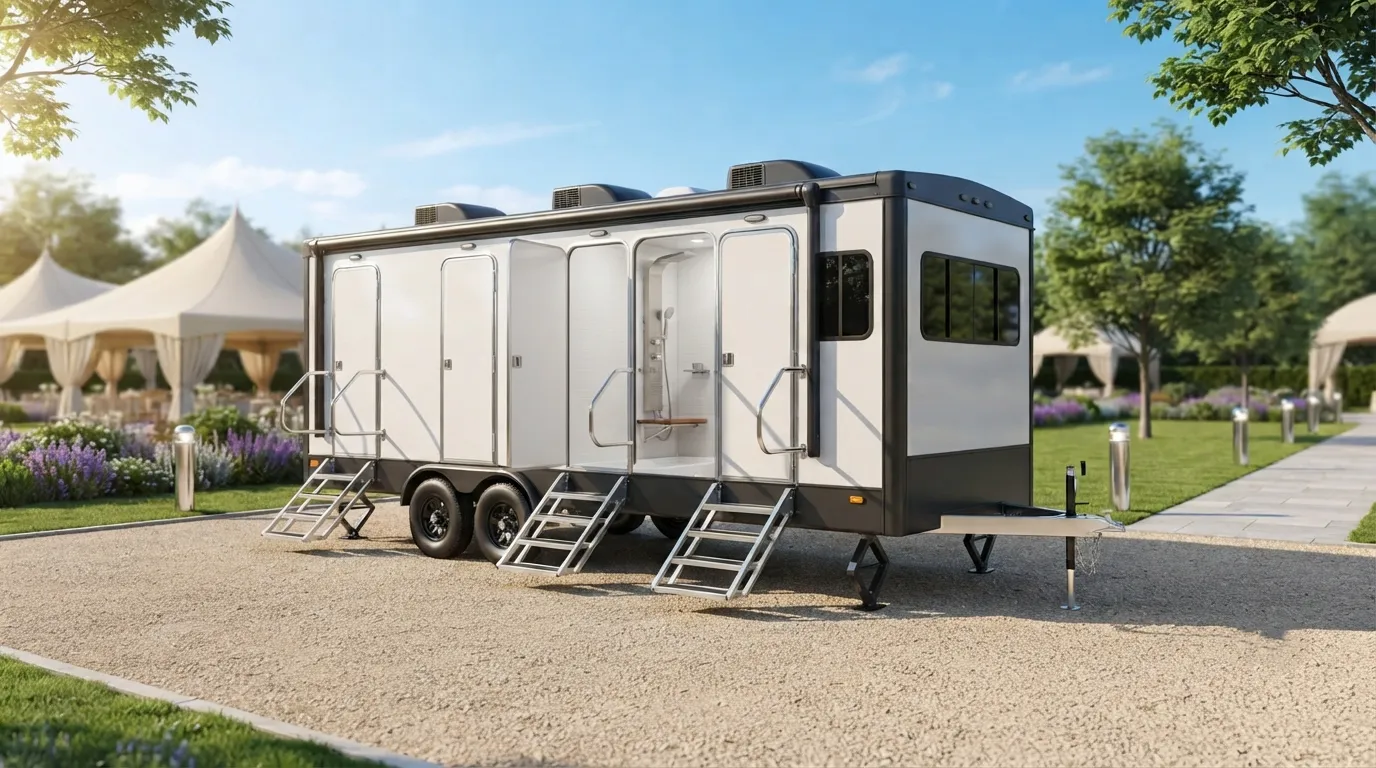
Yes, and how do flushable porta potties work comes down to a small onboard freshwater tank and a hand pump or foot pedal that pushes a measured amount of water into the bowl, which then drains into a separate holding tank below. It's a real flush, just not tied to a sewer line. That's the difference between a standard porta potty rental and a deluxe flushable porta potty: the deluxe unit adds the flush mechanism, a larger interior, and usually a sink built into the same footprint. Weddings and backyard events in Livermore lean toward deluxe units for that reason. Camping trips ask a similar question about how camping porta potties work, and the honest answer is the same tank-and-chemical system, just a smaller footprint meant to travel. For a wedding or backyard party, wedding restroom rental and event restroom rental both spec deluxe units by default.
How Often Do Units Get Serviced?
ANSI/PSAI Z4.3 sets one service visit per week for up to 10 users over a 40 hour week as the baseline interval, and that's the standard we build routes around. High-traffic events or full construction crews need more frequent stops, sometimes twice a week or daily during peak use. Service means pumping the tank, restocking chemical and paper, and wiping down the interior. If you're not sure how the visit schedule breaks down, how often are porta potties cleaned covers the ranges by use case. Construction sites in particular fall under OSHA 1926.51(c), which sets toilet counts by crew size, not by preference, so the service schedule has to keep pace with headcount. A grease trap runs on a different clock entirely, getting pumped once fats, oils, grease and solids reach 25 percent of the liquid depth, which is a fill-level trigger rather than a calendar one. If your business runs a kitchen, grease trap pumping explains that measurement. A home septic tank is a slower cycle still, typically pumped every 3 to 5 years depending on tank size and household size, and septic tank cleaning chemicals sold for home use aren't part of that service, since a pump-out removes solids a chemical additive can't touch; covered on our how often to pump a septic tank page.
FAQ
What chemical goes in a porta potty tank?
A blue or green deodorizing chemical, usually a formaldehyde-free blend now, drops into the tank before delivery. It breaks down solids and masks odor between services. Livermore Porta Pros stocks and restocks this chemical on every service visit, so you never need to buy or handle it yourself.
How many porta potties does a construction site need?
OSHA 1926.51(c) sets 1 toilet for 20 workers or fewer, then 1 toilet and 1 urinal per 40 workers up to 200. Our how many porta potties do I need guide walks through the math, and OSHA portable toilet requirements covers the full ratio table.
Do porta potties need to be ADA accessible?
Yes, when units are clustered, ADA Standards section 213.2 requires at least 5 percent to be accessible, and never fewer than one unit. An accessible unit needs a 60 inch turning circle inside per section 304.3.1. See ADA accessible porta potty for what that unit includes.
Can I place a porta potty on the street in Livermore?
Placement in the public right of way needs confirming with the city before delivery. We check clearance and access when we schedule, and our porta potty placement guide covers driveway and street setup questions in more detail.
How far will Livermore Porta Pros deliver?
We serve Livermore and drive out to nearby cities regularly, including Dublin at 9.5 miles and San Ramon at 15.3 miles. Check service areas for the full list, or visit request a quote to confirm delivery to your address and get pricing.
Next step
Get a delivery date
Tell us the address, the dates and the headcount. We size the order and confirm the route.