Where should a porta potty go on a job site?
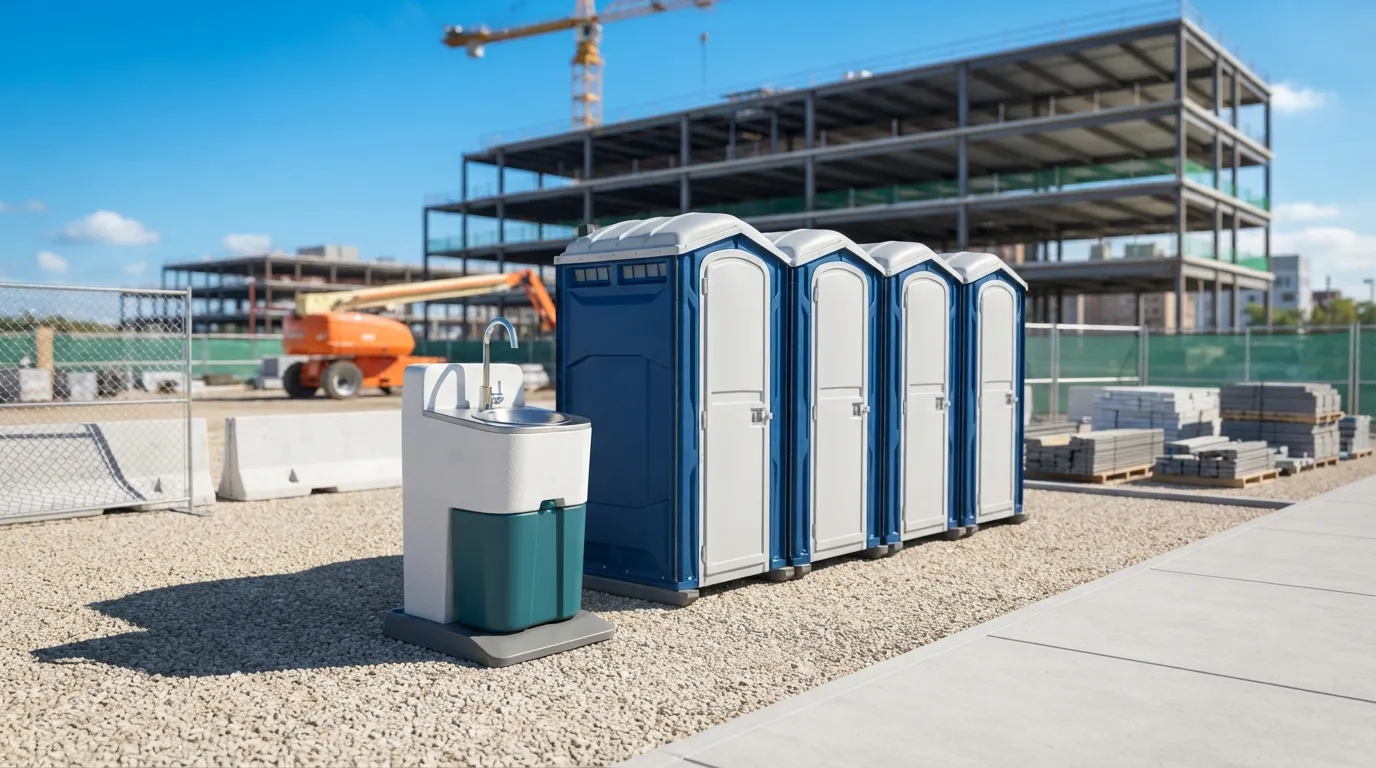
Start with ground. It has to be level and firm, per standard porta potty rental specs, since a standard unit runs about 44 by 48 inches on the ground and stands roughly 92 inches tall, which makes it top-heavy on soft dirt or a slope. Livermore job sites with graded but unpaved lots should set units on compacted fill or plywood if the ground stays soft after rain, and the same grading concern applies to construction site services planning generally. Keep the unit within reach of the service route: our trucks need clear approach to pump and restock, and blocking that with staged material or a parked skid steer means a missed service. OSHA 1926.51(c) sets the ratio that drives how many units you place, not just where, so pair your how many porta potties do i need count with a placement plan before delivery day. For multi-unit clusters, ADA Standards section 213.2 requires that at least 5 percent of clustered single-user units be accessible, with a minimum of one, so plan an ada accessible porta potty into the layout from the start, not as an afterthought. If the crew works with paints or coatings on site, OSHA 1926.51(f)(1) requires washing facilities nearby, which means a handwashing station rental belongs next to the mixing or spraying area, not back by the trailer, and a portable sink rental works just as well if plumbing hookups are not available.
Can a porta potty sit in the street or right of way?
Placement in the public right of way in Livermore needs confirming with the city before delivery; we are not going to guess at a rule that could get your unit towed or ticketed. If your project needs a dumpster placement permit for a roll-off dumpster rental sharing that same curb space, check both at once, since dumpster placement permit cost and porta potty placement rules often get handled by the same city desk. A roll-off truck needs about 60 feet of straight clearance behind it to drop or pull a container, so if the site backs onto a narrow street, plan the load zone before either delivery arrives. Until the city confirms, keep units and dumpsters on private grade, set back from the curb, and coordinate with whoever holds the temporary fence rental contract so the enclosure does not box in the access lane.
What clearance does an accessible unit need?
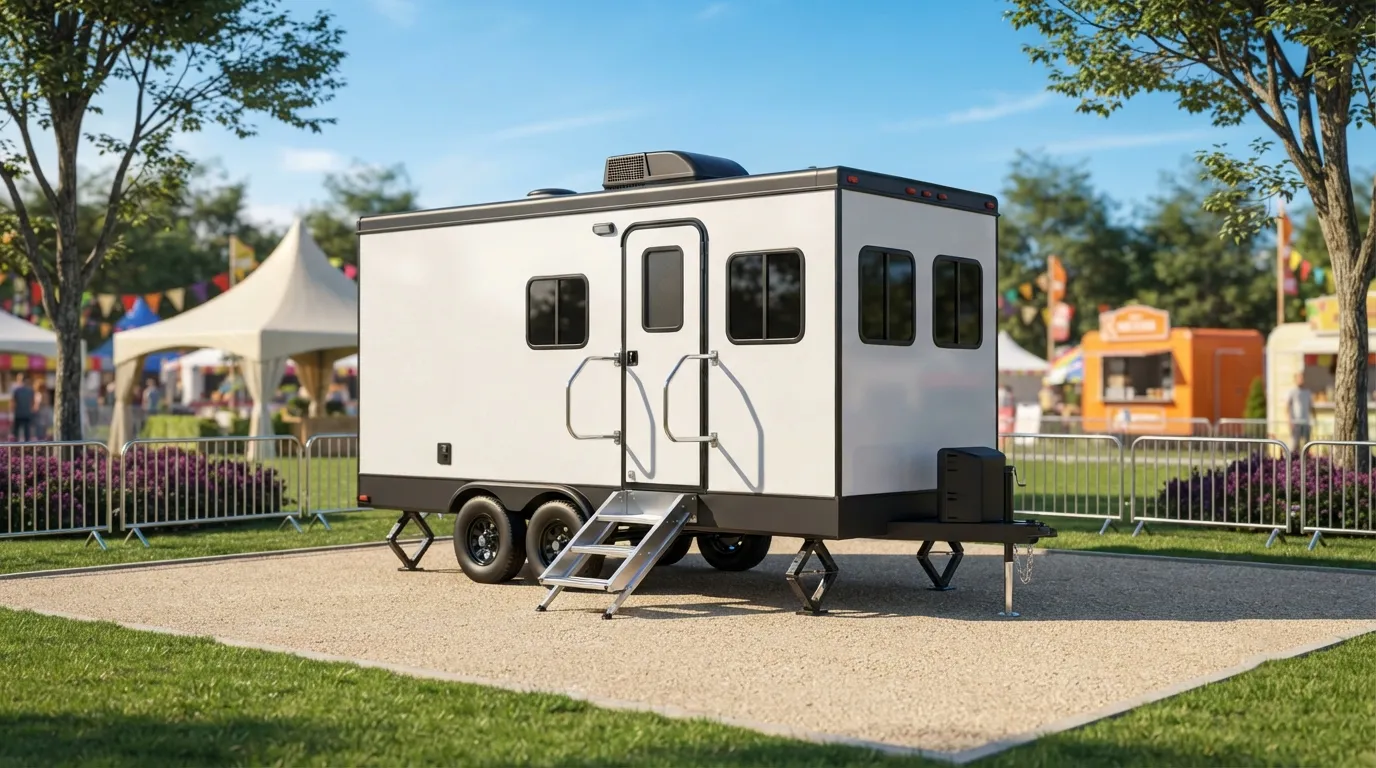
ADA Standards section 403.5.1 sets a 36 inch minimum clear width for the approach route, and section 404.2.3 requires a 32 inch clear door opening on the unit itself, so measure the path before you commit to a spot behind stacked material or a fence line. Section 304.3.1 calls for a 60 inch turning circle in front of the unit, which rules out tight corners between a dumpster and a fence panel. Section 405.2 caps any ramp at a 1:12 slope, so a raised pad or curb approach needs a real ramp, not a scrap of plywood propped at an angle. If the site also runs a restroom trailer rental instead of standalone units, the same clearance math applies at the trailer ramp and door, whether it is a 2 stall restroom trailer or a larger 4 stall restroom trailer. Livermore sites near uneven grading, common on lots along the valley floor, should budget extra pad space for this rather than squeezing the accessible unit into whatever gap is left.
How far from the work area should units and dumpsters sit?
Close enough that a break does not eat ten minutes walking, far enough that debris and dust do not sit on top of the units. ANSI/PSAI Z4.3 sets a weekly service interval as the baseline for up to 10 users over a 40 hour week, so if your crew count runs higher, either add units or shorten the interval, and either way the truck needs a clear path back to the same spot every time. OSHA 1926.25 requires scrap and debris cleared from work areas, which in practice means the porta potty pad should not double as the dumpster's splash zone. If you are staging a storage container rental or a mobile office trailer rental on the same footprint, note that mobile office trailer replacement doors and hardware take time to source, so protect the trailer's door swing from forklift traffic rather than planning to fix it later. Septic-side jobs, including anyone running septic pumping service or checking septic tank pumping cost ahead of time, need a similar clear approach for the pump truck's hose run.
| unit | duration | typical price |
|---|---|---|
| standard | day | $150 |
| standard | week | $200 |
| ada | day | $230 |
| delivery_fee | day | $150 |
Prices shown are typical, not a quote; see porta potty rental cost for full bands, or porta potty rental per day if you only need a short window.
Do I need a permit to place a porta potty on my property?
For a private lot with no street or sidewalk placement, most residential and job site setups do not trigger a permit question. See porta potty permit requirements for what to check locally, and confirm right of way rules with the city before placing anything past your property line; the same question comes up on our service areas page for nearby towns.
How much clearance does the service truck need?
Our trucks need a straight, unobstructed path to the unit's door side, plus enough room to park without blocking traffic on site. Roll-off deliveries need about 60 feet of clearance behind the truck. Tight urban lots in Livermore sometimes require a walk-in service plan instead, so mention any access issue when you request a quote.
Can I move a rented unit myself once it's placed?
Sliding it a few feet on the same pad is fine if the tank is not full. Moving it across the site risks tipping a unit holding 60 to 70 gallons of waste. Call us to reposition it instead, especially before a scheduled pump.
What if my site has no level ground?
Compacted gravel or a plywood pad under the unit solves most soft-ground problems. For consistently uneven sites, a deluxe flushable porta potty with a wider base footprint sometimes handles minor slope better than a standard unit. Ask us to inspect the pad before delivery, and check our porta potty rental checklist for other pre-delivery items.
Do handwashing stations need special placement too?
Yes, if paints, coatings or similar contaminants are in use, OSHA 1926.51(f)(1) requires washing facilities near that work. Otherwise 29 CFR 1910.141(d)(2) governs supply of soap and towels wherever a handwashing station sits, so keep it accessible, not tucked behind equipment.
Next step
Get a delivery date
Tell us the address, the dates and the headcount. We size the order and confirm the route.