What OSHA actually requires
Two different rules get confused constantly, so let's separate them. OSHA 1926.51(a)(1) requires an adequate supply of potable water at every construction workplace, full stop, no exceptions carved out for small crews. Separately, OSHA 1926.51(f)(1) requires washing facilities specifically where employees apply paints, coatings, herbicides or insecticides, or work around other harmful contaminants. That is a narrower trigger than people assume. It is not a blanket handwashing mandate for every job site in Livermore. If your crew is framing or pouring concrete with no coating or chemical exposure, the toilet facility ratios under OSHA 1926.51(c) drive your sanitation plan instead. For non-construction workplaces, general industry uses 1910.141(c)(1)(i) ratios instead, a different standard entirely. Farms hiring hand-labor crews fall under a separate rule, OSHA 1928.110, which calls for one facility per 20 employees within a quarter mile walk. Check our farm and agricultural restrooms page if that's your situation.
Do sanitizer stations meet the requirement?
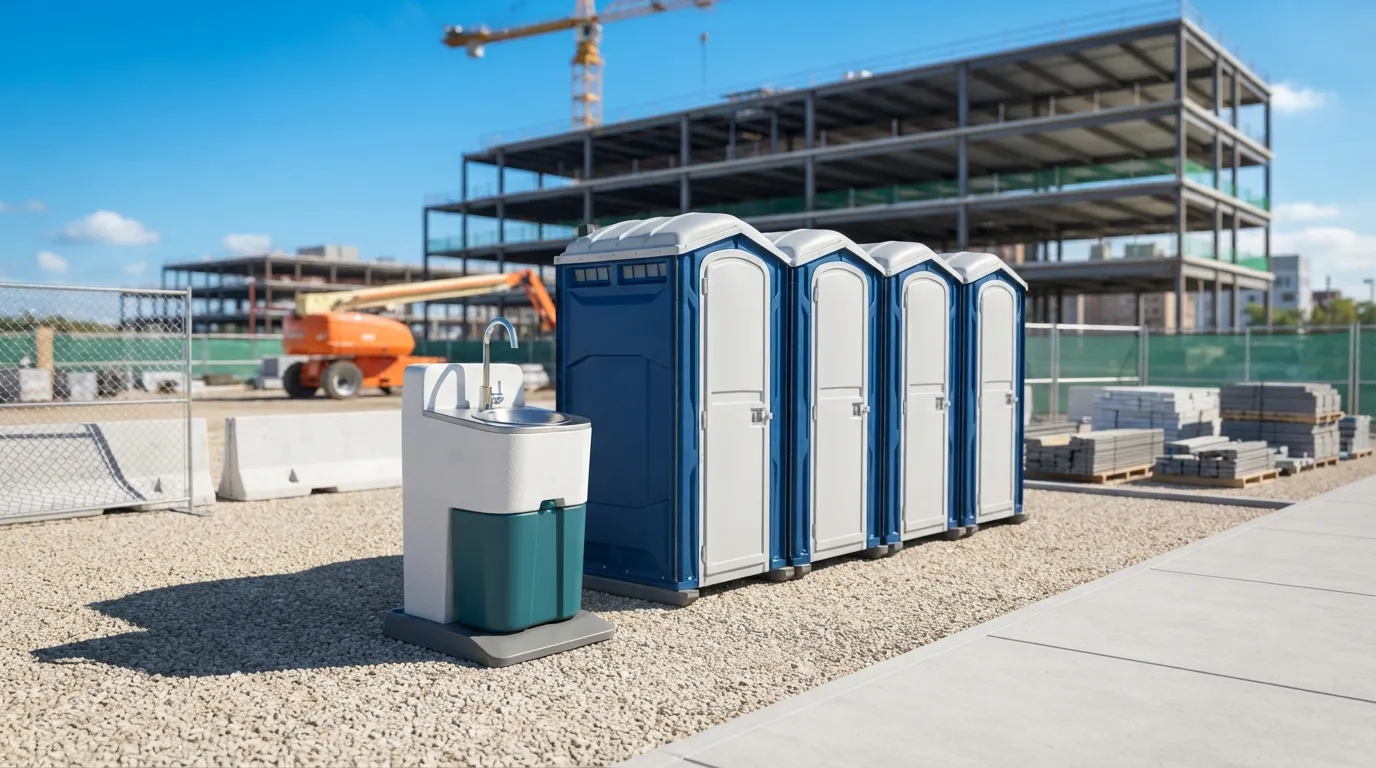
No. Under 29 CFR 1910.141(d)(2), washing facilities must supply soap and towels or a hand drying device. Hand sanitizer alone does not satisfy that rule. A gel pump bottle bolted to a fence post looks compliant and isn't. If your Livermore crew needs to check a box for an inspector, you need actual running or gravity-fed water, soap and a way to dry hands. We rent both types: hand sanitizer station rental for supplemental convenience, and handwashing station rental units built around fresh water tanks for the real requirement. Some crews add a portable sink rental near food prep or paint mixing areas, since that work triggers 1926.51(f)(1) directly. Pair either option with your portable toilet rental order and we deliver everything on one truck run, which saves a trip charge on smaller Livermore sites.
How many stations does my site need?
Match stations to crew size and to how spread out the site is, not just headcount. ANSI/PSAI Z4.3 sets a baseline service interval of once per week for up to 10 users across a 40 hour week, which is a servicing rule, not a placement rule, but it tells you how a single unit's capacity is measured. A tight residential job in downtown Livermore might run fine with one combo unit near the standard porta potty rental setup. A multi-acre commercial build needs stations at every toilet cluster, plus one near any paint or coating station per 1926.51(f)(1). If you're staging an event instead of a job site, see our event restroom rental guide, since crowd math works differently than crew math. Distance matters too. A site 9.5 miles west in Dublin or 15.3 miles northwest in San Ramon still gets the same delivery process, just a longer drive time built into scheduling.
Where do stations need to go on site?
Place them next to the toilet bank and next to any coating, adhesive or pesticide operation, not off in a far corner where nobody bothers walking to them. If your site includes an accessible toilet unit, remember ADA Standards 213.2 requires at least 5 percent of clustered units to be accessible, never fewer than one, and the accessible unit needs a 60 inch turning circle under ADA Standards 304.3.1 plus a 36 inch clear route per 403.5.1. A handwashing station shoved into that clearance defeats the purpose. Keep the approach path stable and firm, per ADA 302.1, and keep the station's controls operable with one hand and under 5 pounds of force per ADA 309.4. Our porta potty placement guide covers ground clearance and truck access in more depth, useful if your Livermore lot has tight turns. Roll-off deliveries need roughly 60 feet of straight clearance behind the truck, so plan station placement around that path if a roll-off dumpster rental is also coming.
Pricing at a glance
| unit | day | week | month |
|---|---|---|---|
| standard toilet | 100-350 | 130-500 | 125-325 |
| service fee | 100-300 | 30-220 | 100-300 |
| delivery fee | 100-500 | 50-150 | 120-420 |
Handwashing stations typically bundle with a toilet order rather than pricing separately, so ask about combined delivery when you request a quote. For a fuller cost breakdown by unit type, see porta potty rental cost or porta potty rental per day if you're renting for a short job.
Do I need a handwashing station if I already have a flushable unit?
Yes, if your crew triggers 1926.51(f)(1) through paint, coating or pesticide work. A flushable toilet, like our deluxe flushable porta potty, handles restroom needs but doesn't replace a dedicated washing station tied to contaminant exposure.
Can one station serve multiple crews on a Livermore site?
Yes, as long as it's within reasonable walking distance of every work area. Spread-out sites usually need more than one. Our how many porta potties do I need guide walks through the same logic for toilet counts.
What's the difference between 1926.51(c) and 1926.51(f)(1)?
1926.51(c) sets toilet facility ratios by crew size. 1926.51(f)(1) requires washing facilities specifically for paint, coating, herbicide or insecticide work. They're separate triggers, and a site can need one, both, or neither depending on the work performed.
Does a restroom trailer include handwashing built in?
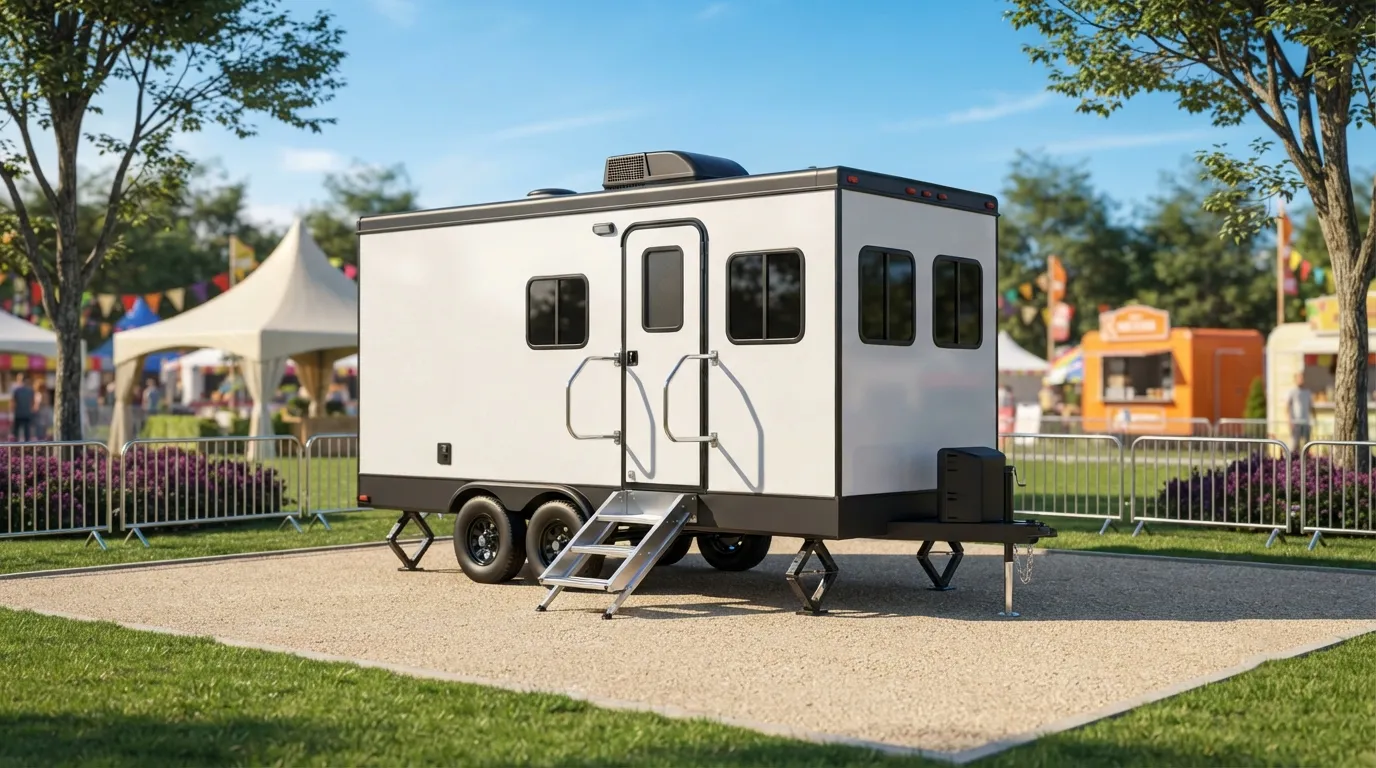
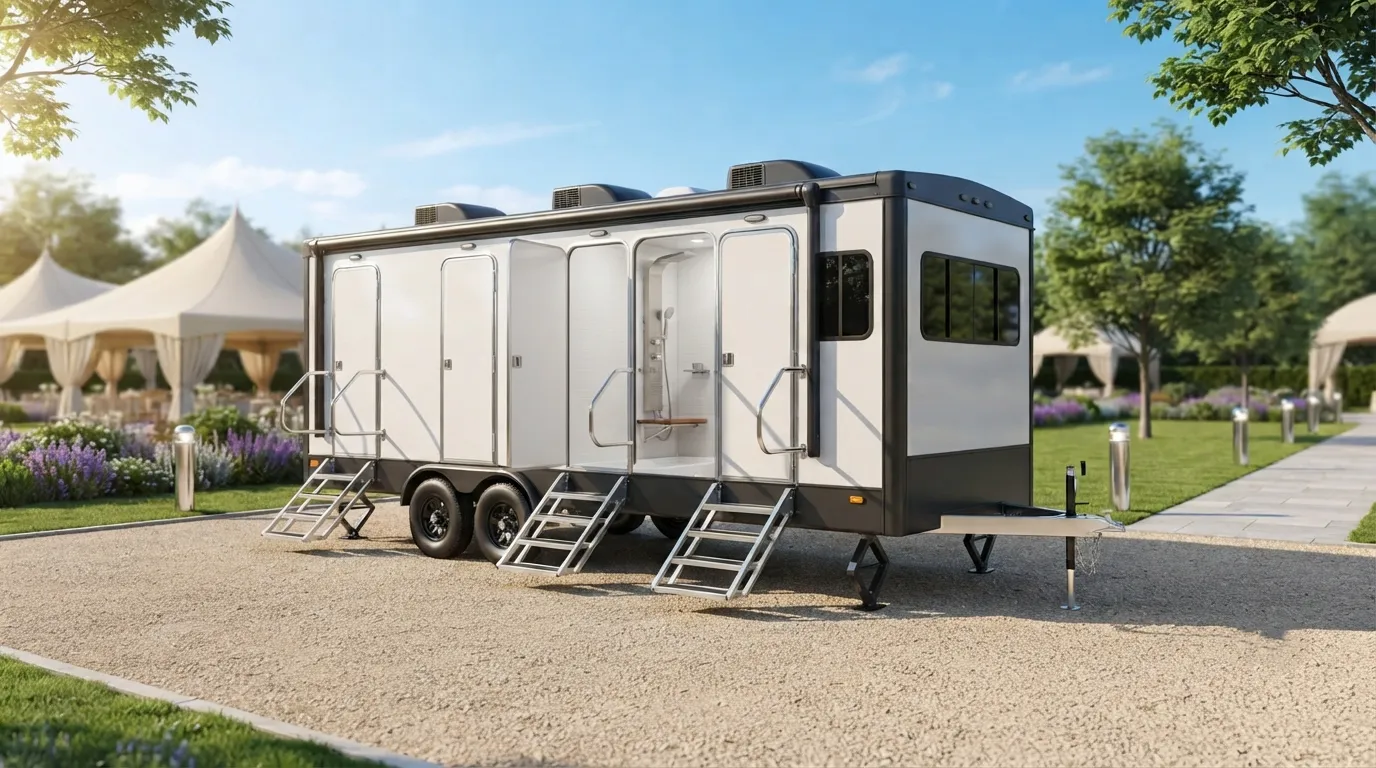
Most do. Check our restroom trailer rental options, since sink counts vary by stall configuration, from 2 stall up to 8 stall units.
Who do I contact to set up service in Livermore?
Reach Livermore Porta Pros through our request a quote page or contact page, and we'll match station count to your site plan before delivery day.
Next step
Get a delivery date
Tell us the address, the dates and the headcount. We size the order and confirm the route.